
Glad You Asked: What is 'by the lake?'



When one of our CBS 58 meteorologists say it'll be "cooler by the lake," what is considered "by the lake?"
Glad You Asked.
"We can figure this out, moment-by-moment, with a complicated lake breeze equation." said CBS 58 morning meteorologist Chris Nelson.
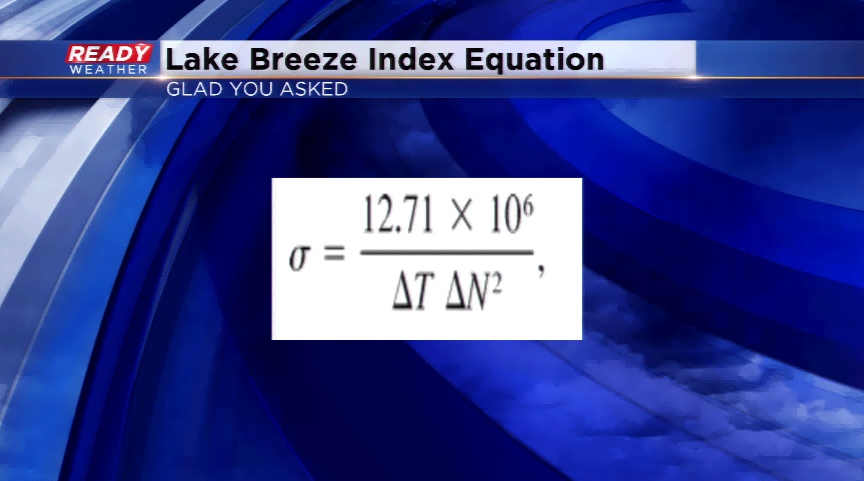 lake breeze index equation
It is complicated. But what meteorologists are really trying to measure is the effect of the lake breeze as it moves inland.
"We have high pressure and cold temperatures near the lake. We have warm temperatures and low pressure inland," said Nelson. "The stronger the southwest wind, that'll keep the lake breeze away. But if we have a light wind, and a big difference in temperatures, that's going to allow for that lake breeze to go all the way west, possibly as far west as Waukesha."
How far can that lake breeze blow?
"We've had times where the lake breeze has gone all the way west to Madison." Nelson said. "But that is very, very rare. Most situations, the lake breeze will never go farther west than Waukesha."